
Themes: Innocence vs. manipulation, betrayal in friendship, emotional growth, nostalgia, finding strength
I never believed in fate. Not until I found the mirror.
It was hidden beneath a dusty cloth in the attic of my grandmother’s house — cracked slightly at the edges, its surface foggy with age. But when I looked into it, I didn’t just see myself. I saw a version of me—quiet, kind, and used—trapped behind the glass, screaming silently.
That version was Shivani. That version… was me.
It all began in school, back in the 90s — when love letters were still written on scented paper, passed in secret between trembling hands.
Monika was my best friend. Bold, charming, and obsessed with love. She had a thing for a boy named Goldy, but things changed when another boy, Gagan, began stalking her. Monika said he proposed, and strangely, she said yes. She was only 12. I didn’t know what love meant back then, but I knew obsession wasn’t it.
Soon, their story turned into a 90s fairytale—late-night chats, scribbled letters, and secret meetings. She used me to help her meet Gagan, sneaking through alleyways and making up excuses. I was the “innocent one,” the puppet in her romantic play.
One day, I was forced into a car ride where Monika and Gagan kissed in front of me. I was mortified. I refused to play along after that. But Monika didn’t stop — she found someone else for me: Aman. Gagan’s friend. He was quiet, wore a turban, and had a soft beard — respectful on the outside, but distant, unreadable.
Monika tried setting me up, even forged a love letter pretending to be me and gave it to Aman. When I found out, I cried in the classroom, surrounded by laughter and whispers. Aman came and told Monika, “I can only be Shivani’s friend.” But the damage was done. The teasing never stopped.
Then came a day I’ll never forget.
I went to Aman’s class to check if there was a letter from Monika, like always. He stood too close, backed me into the wall, looked me in the eyes, and said, “I love you.” My heart stopped. Then he laughed and said, “Gagan told Monika to tell you this.”
It wasn’t real. Just another joke. Another scene in their twisted love game.
I walked away, trembling — not because someone confessed, but because it was fake. Because I was used again.
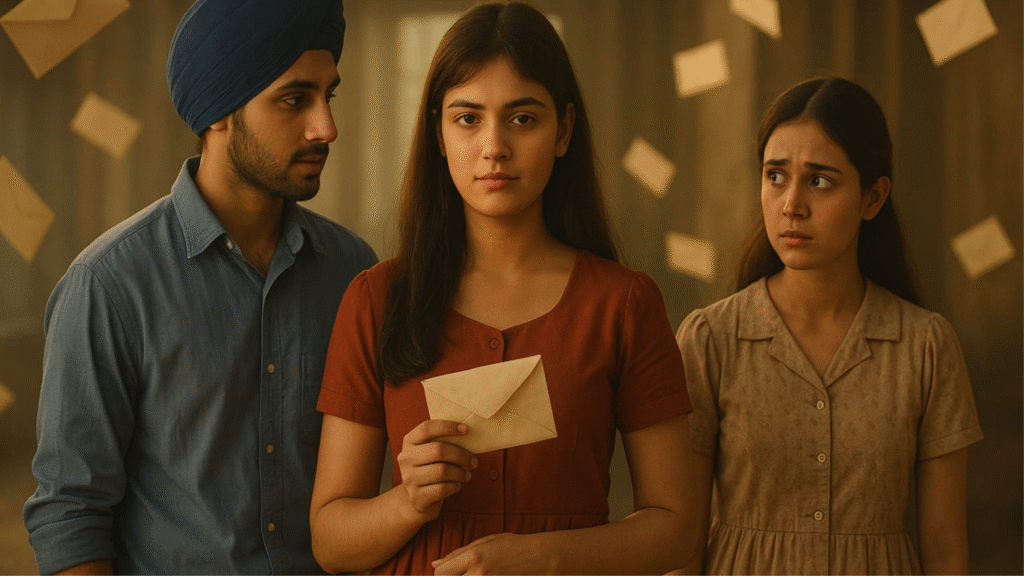
One day, Monika and Gagan broke up. But the manipulation didn’t end. Aman stopped me after school, holding an envelope and begging me to give it to Monika. “If you don’t, Gagan might kill himself,” he said, eyes soft with a lie.
I was scared. I took it.
The next day, Monika refused it. Blamed me.
That was the final crack in the mirror.
I handed the envelope to our class in-charge. Told her everything.
Aman was called in. He confessed. And that day, the reflection in the attic mirror changed.
It showed Shivani — not broken, not afraid, but strong.
That was the day I walked away from Monika and Gagan forever.
Some mirrors don’t just show who you are — they show who you’ve let others turn you into.
And sometimes, breaking free isn’t about smashing the glass — it’s about finally walking away from the ones who fog it up.
Leave a Comment